

Johannesburg – With technology evolving at a rapid rate, the working environment is constantly changing. How can we best prepare ourselves and our children for future careers?
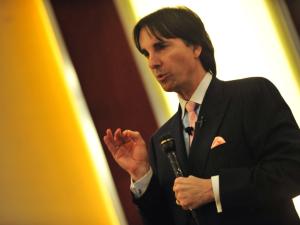
Human behaviourist, author and teacher Dr John Demartini offers some pointers.
Futurists are specialists who research the future probabilities of technologies and social projected norms.
According to their insights, many of the jobs we see right now will no longer exist in the future.
We’re already seeing this, with many machines taking the place of people – automated jobs are faster and save time and money.
It’s important to have foresight and education – hopefully the educational system is currently attempting to keep up with technological advancements so that we can get the education we require.
One of the things we can do is read books about the future, including science fiction, which has historically given us an insight into what the future probably holds.
Over the past 50 years, science fiction books and movies have often been based on research done by futurists, and have shown us an environment where robots and automation are a way of life.
Let’s look at transportation systems and consider the likelihood that in 10 years’ time, the entire taxi system, for example, will have disappeared. Instead, we will have automatic cars that will take us wherever we want to go.
Think about it; some cars can already park themselves. So 10 years from now, the entire taxi and Uber system could be a thing of the past. That’s a massive industry that could be gone. So if you’re not thinking ahead, you could become redundant.
Is your job in jeopardy?
Technology is evolving and jobs are changing. So you need to ask yourself regularly, “What part of my job could become obsolete?”
Consider whether your job could be in jeopardy, where trends are going and what you need to do to keep current.
Constantly think ahead. Foresight can at times be greater than hindsight. Make sure you’re not creating an entire company that will be obsolete in 10 years’ time.
Of course, not all jobs will become redundant in the future, especially classical and essential positions.
So when you’re considering pursuing a career, it’s best to look at those that have the highest probability of being sustainable on a long term basis.
Classic careers that are less likely to change include teaching positions. Teaching is not going to go away although the form of teaching is going to evolve, as will the technology of teaching and how we learn. But teaching through using a human brain is still probably going to exist.
A 100 years from now there will still be some form of teachers out there. But how they teach and what they teach and how they gather the information and how they present the data is evolving.
And we’re watching that daily. We have to look at new ways that things are changing as often as every three months.
You have to be open and resilient to change. If you’re doing your job and it inspires you and you’re engaged in your work, and you’re living by your highest values by doing it, you will have the most resilience, objectivity and ability to adapt to change.
If you’re doing something meaningful, you’re engaged, and more likely to keep up with changes. Challenge doesn’t frighten you.
But if you’re not inspired by your job, you are going to resist change. You’re unengaged; you do not identify with the job. You’ll say, “I wasn’t hired to do that. Why should I do that? That’s somebody else’s job.”
But when you’re engaged, you feel that your job is part of your inspired life, your identity, your career path and you do whatever it takes to get the job done and you become most adaptable to change. You are less likely to become obsolete if you most efficiently and effectively serve.
* Dr John Demartini is a human behaviour specialist, educator, author and the founder of the Demartini Institute. Visit www.DrDemartini.com